
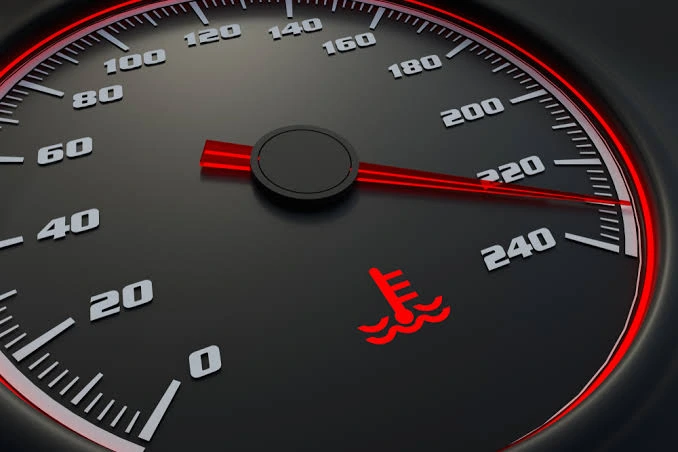
If your BMW coolant warning keeps coming on, the next step is to establish whether coolant is genuinely low, escaping from the system, or being reported incorrectly. Repeated top-ups cannot distinguish these possibilities. Record the exact message, follow its safety instructions and arrange an assessment based on your BMW’s model, year, engine and repair history.
First, distinguish low coolant from overheating
A BMW low coolant warning is not the same as an overheating message. Read the full instruction rather than relying on the symbol’s colour.
If the display tells you to stop, or you notice steam or signs of overheating, pull over safely, switch off the engine and arrange assistance. Do not continue driving to see whether the warning clears.
Never open a hot coolant reservoir: escaping pressurised coolant can cause scalding. For a level-only warning, follow your vehicle’s manual and seek advice before continuing if the level or condition is uncertain.
Document the warning before the next visit
Once safely parked, photograph the complete dashboard or iDrive message. A useful record includes:
- Date, mileage and whether it appeared at startup, in traffic or after a longer journey.
- Any temperature warning, visible fluid beneath the car or change in cabin heating.
- Dates and approximate quantities of previous top-ups, including the product used.
- Recent cooling-system repairs, coolant changes or overheating incidents.
If the handbook allows an owner level check, use its cold-engine procedure and identify the correct reservoir. Record the level under comparable conditions; do not compare a hot reading with a cold one.
Bring invoices and earlier findings too. “It returned two days after adding coolant” gives the technician more useful context than “the light comes and goes”.
Why another top-up does not identify the cause
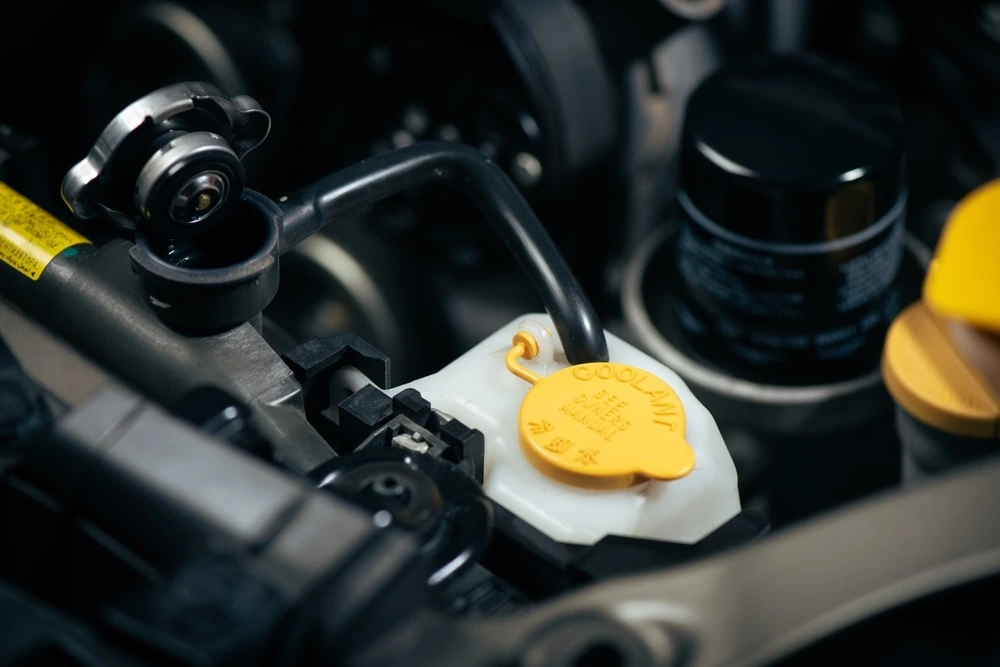
Adding coolant may restore the level and clear the message, but it does not establish why the level fell. Possible inspection areas include the reservoir, cap, hoses, connections, radiator and pump seals. These are checks, not a replacement list.
If the warning began after cooling-system work, the technician should review whether filling and bleeding followed the correct engine-specific procedure.
A warning with a verified correct level needs a different investigation. BMW has documented coolant-level connector corrosion on specified X3, X4, X5, X6 and X7 generations with four- or six-cylinder engines. That bulletin supports inspecting an applicable vehicle; it does not prove every recurring warning is a sensor fault.
Dubai’s summer conditions add cooling-system demands, as the RTA highlights. However, heat alone is not a diagnosis for repeated BMW coolant loss.
Why the exact BMW matters
A model badge alone is insufficient. Cooling circuits, reservoir arrangements, coolant requirements and bleeding procedures can differ with engine, production date and powertrain.
Some BMWs have a separate low-temperature circuit. BMW guidance for certain early B58C-powered X5, X6 and X7 vehicles addresses that circuit specifically, illustrating why advice for another engine may not apply.
Use the vehicle’s VIN to identify applicable information. Do not choose coolant solely by colour or assume an online repair guide covers your car. Hybrid and electric models also require their own procedures.
What professional diagnosis should establish
BMW cooling system diagnosis should connect the warning history to physical findings:
- Verify the level and circuit. Identify which reservoir and monitoring system relate to the complaint.
- Inspect for loss. Check relevant components and use pressure testing where appropriate, following the vehicle-specific procedure.
- Investigate inconsistent readings. If the level is correct, assess the level-sensing circuit, connections and applicable diagnostic information.
- Explain the evidence. Separate confirmed faults from possibilities and identify any further checks needed.
No visible puddle does not exclude coolant loss, and one pressure test may not reveal every internal leak. A fault code alone does not justify replacing a pump, thermostat or sensor.
After repair, ask how the workshop will verify the result, including the correct refill procedure and follow-up level checks.
FAQs
Can I use any coolant labelled suitable for BMW?
Check the specification required for your exact vehicle and whether the product is premixed or concentrated. A broad compatibility claim is not enough; ask for confirmation before adding an unfamiliar product.
Should I clear the warning before an inspection?
Photograph it and preserve available fault information first. Clearing a message does not repair the underlying cause and can remove useful diagnostic context.
Arrange a focused coolant assessment
If your BMW coolant warning keeps coming on, contact Expert Car Garage in Al Quoz, Dubai, to discuss a cooling-system assessment. Share your vehicle details, warning photo and top-up history so the next checks start with useful evidence.